Module 1 - Understanding and developing leadership practice
Section outline
-
Module overview
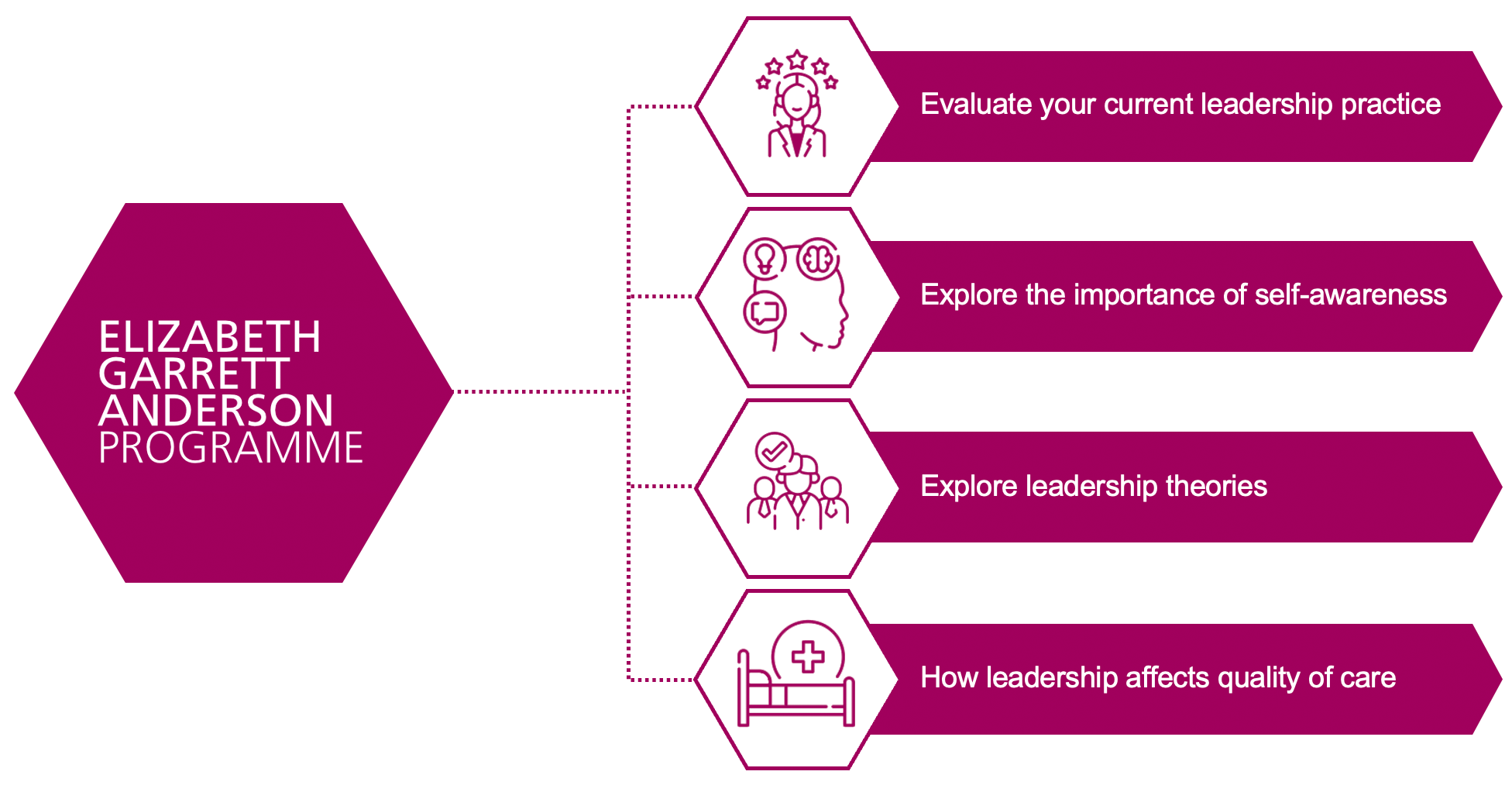
You will begin your Anderson journey (including Senior Leadership Apprenticeships) by critically evaluating your current leadership practice and the extent to which your work, and that of your colleagues, makes a difference to patient care. You will also explore the importance of self-awareness, resilience and self-care and review these aspects of your own leadership practice. The module will explore leadership theories and concepts, introducing you to what is known about how leadership affects the quality of care and the patient experience. You will apply theory in practice by exploring how your leadership can positively enhance care and challenge behaviours which have a negative impact.
Programme golden threads
Running through all learning activities are three golden threads that reflect the fundamental values of the programme and are central to your leadership practice:
“Through my participation on the Anderson programme, I will demonstrate how I, as a leader working with my team, organisation and system, strive to:
- Understand equality, diversity and inclusion, and implement this proactively in my leadership
- Remain constantly in tune with how the quality of care provided to patients, service users and their carers matches what we would want for those we love
- Lead sustainable improvement of relevant services and processes to ultimately enhance patient care and population health.”
Planning your learning
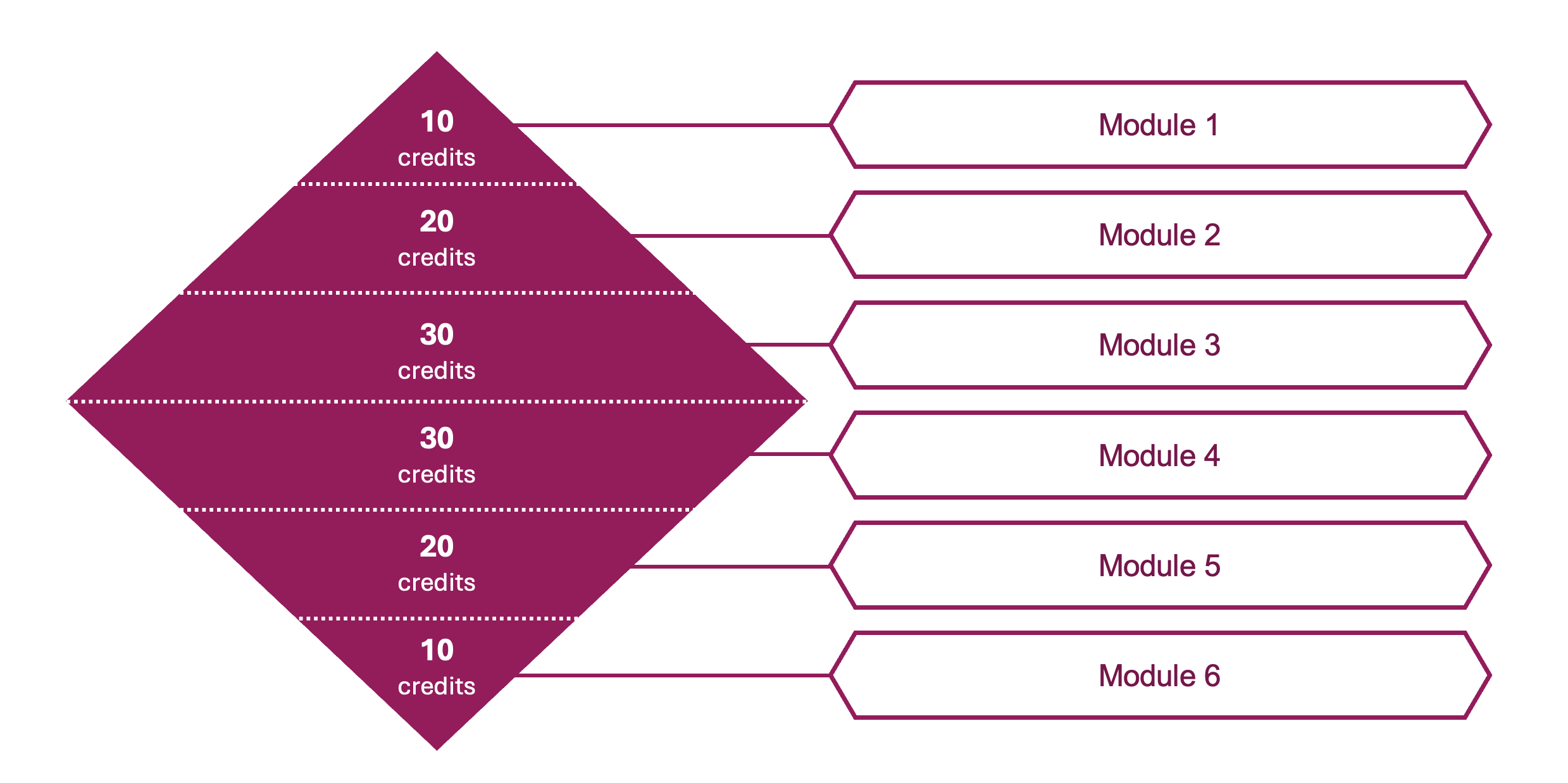
Module 1 is a four-week module worth ten credits. There are four topics of learning to complete; each topic represents one week of learning activity.
A scheduled virtual meeting will take place in Week 1 of this module, with your tutor and your tutor group, to go through all of the module learning activities and a schedule highlighting key activities, discussion groups and other virtual meetings, so you know what to expect and are able to plan your time accordingly. There will be the opportunity to clarify this further at your first Action Learning Set (ALS) (or Inquiry Application Group (IAG) for GMTS participants) meeting.
For apprenticeship participants, in the schedule of learning activities, we have provided prompts to log your OTJ (off the job) training in your apprenticeship platform; the indicative time each activity may take is provided in the schedule of learning activities.
Within this module, your tutor group will start to develop your understanding on how to generate evidence for your Evidence Portfolio. The knowledge and skills relevant for this module are detailed below, and behaviours are developed throughout all the programme across all modules.
If you are an apprenticeship participant, please refer to Module 0 to review the knowledge, skills, and behaviours relevant to this module. It is important to be clear about the KSBs that are linked to the Professional Discussion (Portfolio of Evidence) and the KSBs linked to the Strategic Business Proposal.
Learning outcomes
View learning outcomes
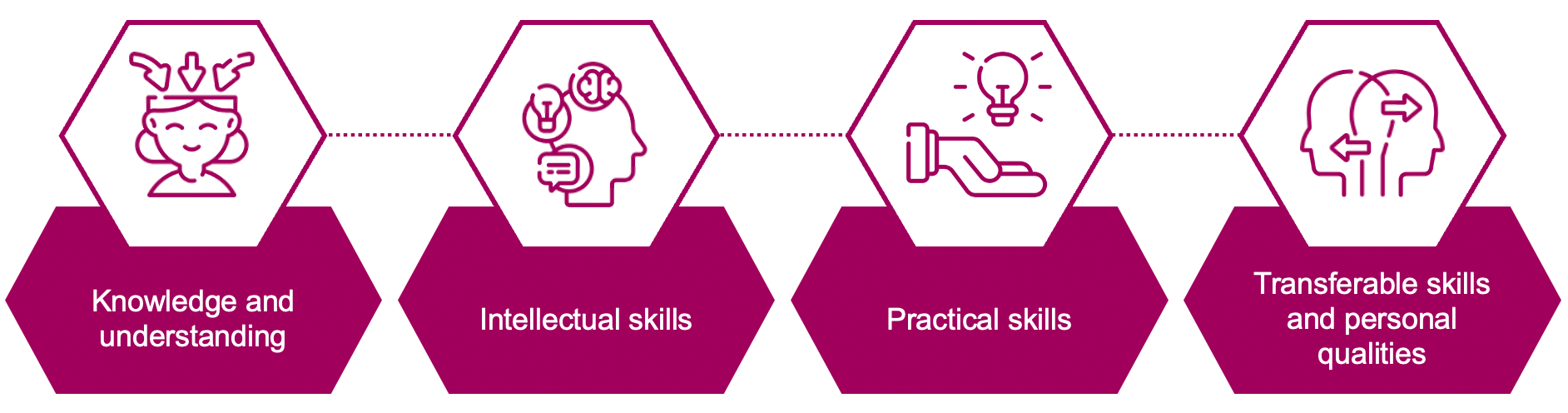
There are 10 learning outcomes for this module:
Category of outcome Learners should be able to: Knowledge and understanding
- Demonstrate systematic understanding of management and leadership theories and debates
- Demonstrate critical awareness of the theories and methods of reflective practice
Intellectual skills
- Critically apply management and leadership theories to your own leadership practice and in the context of change and leading for improvement
- Apply theories and methods of reflective practice
Practical skills
- Demonstrate practical use of appropriate management and leadership skills and approaches to improve the quality of patient care
- Demonstrate reflexivity in your leadership practice
- Demonstrate practical skills to embed diversity, equality and inclusion in your leadership practice
- Demonstrate how your leadership practice improves and sustains care quality
Transferable skills and personal qualities
- Undertake a critical reflection to demonstrate self-awareness, self-reflection, and management of self
- Identify development needs in relation to leadership practice
Developing your personal learning objectives
Take some time to review the Learning Outcomes for this module. Using your Skills Scan that you completed as you joined the programme, consider what you may wish to focus on in Module 1, for example:
- What are you particularly interested in within the module?
- How does this link to your work role and current projects?
Now develop some SMART personal learning objectives for this module and note them in your Learning Journal.
You may be familiar with the SMART mnemonic, if not here is a reminder – your goals need to be:
- Specific
- Measurable
- Achievable
- Realistic
- Time based.

Supporting documents
Below you will find some key documents to support your learning and reading throughout the module.
Module scheduled activities document is now published in your cohort area (it is no longer published with the module contents)
Module bibliography is now published in your cohort area (it is no longer published with the module contents)
-
Students mustMark as done
Your Anderson Learning Journal will function as a:
- Document repository
- Planning tool
- Reflective learning diary
- Progress tracking and monitoring
It is essential that you keep this journal up to date by ensuring you upload key documents and log progress with your learning
-
This checklist shows your progress through the programme (in a similar way to the green dots in the left-hand menu) with the addition of an overall percentage bar completion. As you click 'mark as done' on each activity, this list will automatically update to reflect progress.
(Tutors can see an overview of participant progress using the 'View Progress' tab and turning on progress bars.)
-
The focus of this topic is on individual motivation and purpose. What is it that drives you and your team to do the best job you can? How can you use motivation theories to help you improve patient care and ensure that patients get the best from health and social care leaders?
If you are an apprentice, please refer to Module 0 to review the knowledge, skills, and behaviors relevant to this week.
-
Students mustMark as done
Whether your job is in direct contact with patients and service users, or supporting clinical services, this activity includes important reminders that human needs are at the heart of what we do.
(Duration 1 hour 15 mins)
-
Students mustMark as done
Two of the most important resources you have are your line manager and your work based mentor. How will they be best placed to support you throughout this programme?
(Duration: 2 hours including preparation)
-
Human motivation underpins all aspects of our lives - our basic needs through to self-actualisation (Maslow 1943). Our individual motivation is also linked to our own personal beliefs and values… how important are certain things to us? So much of this is dependent on many variables including our culture, where we live, our education and many more aspects.
(Duration: 30 mins)
Thinking about motivation in our working lives involves complex connections of relationships with our peers and other stakeholders, our skills, knowledge and experiences, and the varying motivators that we demonstrate through our behaviours.
The following activities introduce you to a range of motivation theories, including both classic and more recent interpretations.
As you are reviewing and engaging with these, think about how can you apply these in your own workplace?
-
Students mustMark as done
Human motivation underpins all aspects of our lives - our basic needs through to self-actualisation (Maslow 1943). Our individual motivation is also linked to our own personal beliefs and values… how important are certain things to us? So much of this is dependent on many variables including our culture, where we live, our education and many more aspects.
Thinking about motivation in our working lives involves complex connections of relationships with our peers and other stakeholders, our skills, knowledge and experiences, and the varying motivators that we demonstrate through our behaviours.
The following activities introduce you to a range of motivation theories, including both classic and more recent interpretations.
As you are reviewing and engaging with these, think about how can you apply these in your own workplace?
-
-
Students mustMark as done
A key factor in how motivated we are to do a good job is our sense of why our work matters.
(Duration: 1 hour)
-
Marion Janner is the founder of Star Wards. In this video she reflects on her own experiences as a mental health patient.
(Duration: 3 mins)
-
-
Life as a leader in health and social care can be hugely rewarding. However, it is challenging, tiring and often difficult work, which requires high levels of stamina, resilience, emotional energy and an ability to work with ambiguity. This topic provides you with ideas and resources to support you in maintaining your own well-being and resilience so that, in turn, you can care for and support others.
If you are an apprentice, please refer to Module 0 to review the knowledge, skills, and behaviors relevant to this week.
-
Students mustMark as done
One of the most important resources you have is your time. Do you use it to add value to patient care - directly or indirectly?
(Duration: 2 hours over a week)
-
-
Students mustMark as done
Self-awareness as a leader is a fundamental building block to your effectiveness. But why does self-awareness matter?
(Duration: 30 mins)
-
What is the Ripple Effect? How is it relevant to you? Have a look at this short episode to find out. The following items discuss and present this.
(Duration: 1 hour)
-
-
-
A key aspect of self-management is remaining resilient despite growing expectations. How can you, as a leader under pressure, look after yourself?
(Duration: 2 hours)
-
-
-
Students mustMark as done
Dr Jane Keep is an independent practitioner in personal and organisational change, with 34 years' experience in the NHS and a specialist interest in self care at work. In this activity, they explain why they believe self-care matters in health and social care.
(Duration: 45 mins)
-
Students mustMark as done
Consider this selection of quotes and what they mean to you.
-
-
Traditionally, it could be argued that leadership has been defined by management. This week we will be exploring and recognising that they are in fact different, but with interconnected dimensions. Looking back at some of the early leadership and management literature, we will consider leadership from the perspective of person, process and eventually position. However, there are many who argue that leadership would not exist without followers (Kelley, 2008), and therefore leadership is an interaction between leaders and followers (Grint et al, 2017). To build on this thinking, we will also be exploring some of the overlooked followership theories to help better understand the role of leadership, particularly in the context of health and social care.
If you are an apprentice, please refer to Module 0 to review the knowledge, skills, and behaviors relevant to this week.
-
Students mustMark as done
Examples of good leadership can be found all around us. Whether they were our teachers in school, a manager of a football team, a character in a book or a film, an historical leader, or a member of our own family, these good leaders inspire us and influence our thinking around what good leadership looks like.
(Duration: 30 mins - 1 hour)
-
The following interactive learning activity will give you an overview of how leadership theory has developed over time, bringing you up to date with the most contemporary ideas and offering an opportunity to apply your learning.
(Duration: 3 hours)
-
Students mustView
Leadership is one of those topics about which most people have an opinion – it is a hugely contested subject. Maybe this is because they have worked for someone they viewed as an inspiring leader, or perhaps they grumble about the lack of good leadership where they work. In the workplace, in politics, in the worlds of celebrity and sport, in local communities, in social groups and in families, leadership plays a part and most of us are affected by it in some way.
‘There are almost as many definitions of leadership as there are persons who have attempted to define the concept’ (Bass, 1990: 11).
-
Students mustMark as done
Leadership styles: Balancing task-focus and People-focus.
(this replaces the previous PDF version)
-
-
Students mustMark as done
Why are good leadership and management so important in health and social care? What is the difference between the two?
(Duration: 1 hour 45 mins)
-
Students mustMark as done
The NHS Leadership Academy has developed a model for leadership in healthcare to meet the demands the NHS currently faces. Find out more here
(Duration: 60 mins)
-
A topic reflection from Bharat Khokhrai, a previous NHS Graduate Scheme Financial Manager, in which he highlights a key leadership skill.
-
-
In this topic you’ll focus on the impact that leadership has in the workplace and, particularly, how this affects the quality of care you give to patients. Even if your leadership role is in a non-clinical function, how you lead others ultimately impacts upon patient care.
If you are an apprentice, please refer to Module 0 to review the knowledge, skills, and behaviors relevant to this week.
-
Students mustMark as done
Observing care may not be the easiest thing to do, but it is a powerful development tool. You may gain an understanding of different perspectives on the patient experience.
This activity will form the first part of your assessed work.
(Duration: 5 hours)
-
This web page version of the guide is provided as an accessible alternative to the PDF version below. Content is the same.
-
-
Why does leadership matter to quality care? What effect do your decisions as a manager have on the patient experience? What influence does your leadership have on improvement initiatives?
This activity will form the second part of your assessed work.
(Duration: 2 hours)
-
Students mustViewReceive a grade
Why does leadership matter to quality care? What effect do your decisions as a manager have on the patient experience? What influence does your leadership have on improvement initiatives?
These activities will form the second part of your assessed work.
-
-
Students mustMark as done
What is an authority gradient and how is it relevant to clinical care?
(Duration: 1 hour)
-
This item is an "e-Learn" in the form of a 'moodle book'.
The authority gradient (e-Learn)
When you have finished return to the course using the menu at the left of the screen.
-
This item is an "e-Learn" in the form of a 'moodle book'.
When you have finished return to the course using the menu at the left of the screen.
-
-
Students mustMark as done
Every leader has to consider human factors. This activity introduces some of these factors and highlights their importance in health and social care.
(Duration: 1 hour)
-
The following activities consider an international perspective.
-
Now we want you to think about how other organisations approach patient safety and what you may be able to learn from them. There is no one right way of course, but here is a brief example from a couple of organisations . You may well have other examples that provide food for thought.
-
Students mustView
The Virginia Mason Medical Center has developed a reputation for improving patient safety. How does their approach to staff improvement compare with the approach used in your organisation?
(Duration: 20 mins)
-
NHS Merseycare is a Mental Health and Community Organisation with over 8,500 members of staff.
-
-
Students mustMark as done
As a leader, you will occasionally be called upon to deal with a sensitive situation involving a member of your staff. This activity will explore approaches to these situations.
(Duration: 1 hour)
(Alternative video link alternative added Nov 2024)
-
Conversations on a sensitive topic can be difficult to have. This activity provides an insight into approaches towards difficult conversations.
(Duration: 1.5 hour)
-
-
-
-
Through an immersive scenario you will explore how to deal with a complaint and apply this to your own workplace.
(Duration: 2 hours)
-
Students mustMark as donePlease allow a few seconds for the H5P to load. You can also maximise the window by clicking on the double arrows in the top left of the player.
-
-
Students mustMark as done
A reflection video from Fiona Copeland. Fiona is the former chairperson of the Primary Ciliary Dyskinasia Family Support Group.
-
-
In this topic you’ll focus on the impact that leadership has in the work place and, particularly, how this affects the quality of care you give to patients. Even if your leadership role is in a non-clinical function, how you lead others ultimately impacts upon patient care.
-
Students mustMark as done
Now you have completed this unit, record this in your Off the Job log, indicative hours are noted in the Schedule of Activities but you may have taken more or less time to complete them.
-
Students mustMark as done
As you complete the learning activities for this module, it is useful to review the module, consider these following questions and make notes in your Learning Journal.
-
Review the Cohort Calendar to check your Module 1 submission dates.
Now visit the assessment area for your specific cohort to continue and complete your academic assignments.
-
-
Publications referenced within the bibliography.