3. Leadership thinking: past and present - task
Situational leadership
Use the situational leadership grid to write down in each style quadrant how a leader might typically behave and what the positive and negative consequences of each style might be.
Leadership styles: balancing task-focus and people-focus
|
High |
People concern |
Country club manager (High people – Low task) |
Middle of road manager (Medium people and task)
Focus on work output as well as people morale. |
Team manager (High people – High task) |
|
|
Impoverished manager (Low people – Low task) |
Authority-obedience manager (Low people-High task) |
||||
|
Low |
Task concern |
High |
|||
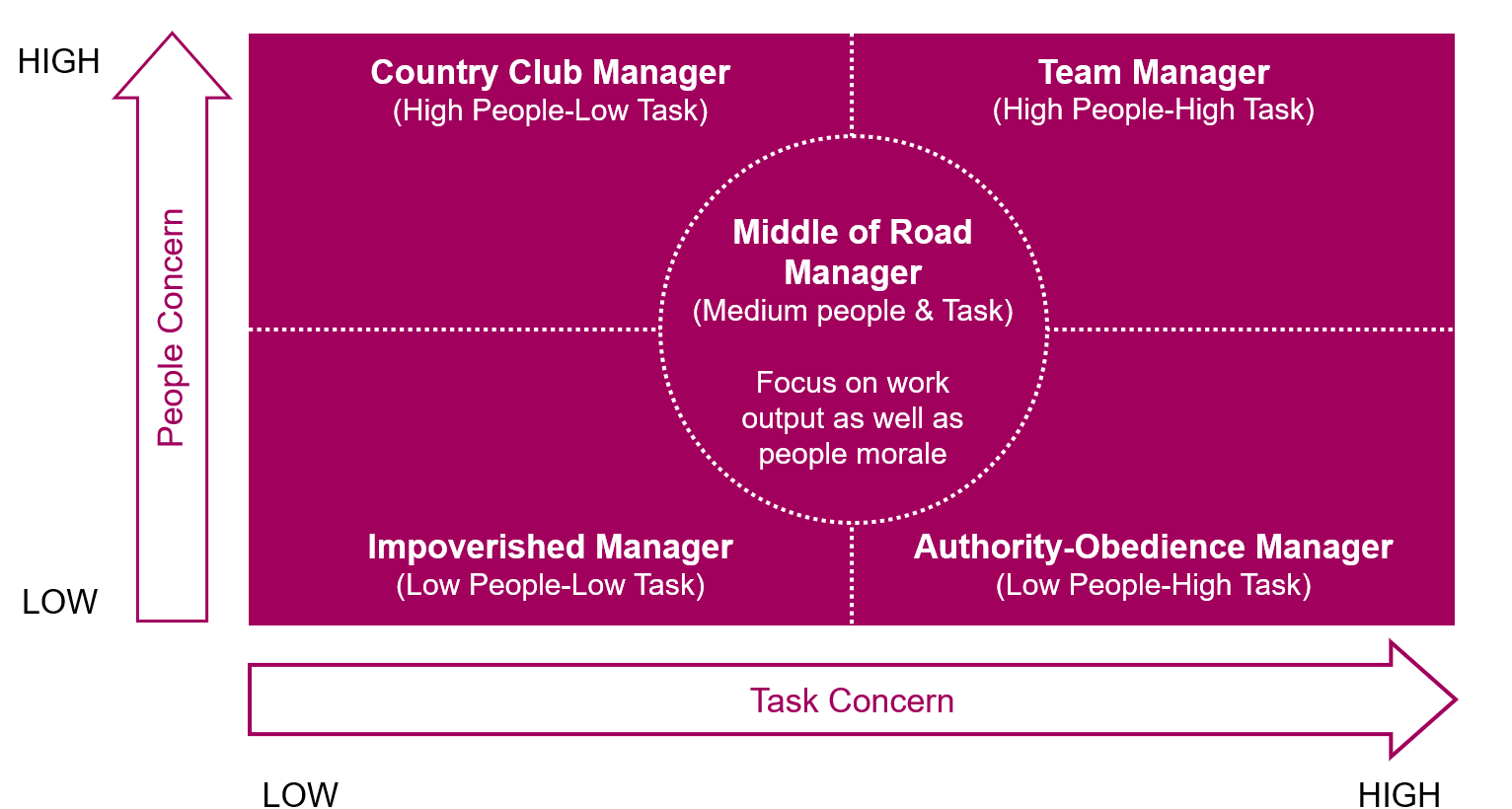
Show the grid to people at work. Ask them to reflect on it and tell you where they would place you in these quadrants and why. You may need to gently probe with lots of open questions to find out what they really think!
Share with your manager
Arrange a meeting with your manager.
Share with them what you have understood about situational and contingency leadership. How much does each of you vary your leadership approach depending on the situation you are dealing with? Share specific examples and talk about how comfortable or uncomfortable you feel adopting different leadership styles. How could you become more effective in adopting different leadership styles?
Meet with a trusted colleague
Arrange a meeting with a trusted colleague.
Share an experience when you have felt that servant, ethical or authentic leadership was relevant. What was it about the situation that made this feel important? How did your leadership demonstrate genuine service, ethics or authenticity? What might you do differently if you dealt with the same situation again?
Review your work
Plan some time to review the reflective work you have done and the discussions you have had as part of this activity session.
Look out for examples of leadership in your workplace which illustrate any of the theories you have learnt about. Do you notice any patterns in the types of leadership you observe?
Note your observations in your learning journal.