3. Leadership as Position: Authority Gradient
What is an authority gradient and how is it relevant to clinical care?
(Duration: 1 hour)
Cultural factors and other aspects
While trying to achieve a shallow Authority Gradient appears to be the ideal state for everyday team working, there are some cultural factors and other aspects which can increase the gradient.
For example, the cultural values of yourself or your colleagues may mean that team members do not want to speak up because they are afraid of challenging elders or people in authority. Some team members may be concerned that they will cause the leader to lose face if a colleague suggests there might be a problem with what they are doing. Team members could feel that they do not have the confidence and skills to raise concerns constructively and effectively without damaging relationships or reputations.
All these sensitivities underline the importance of proactively and explicitly developing a shallow Authority Gradient and a pool of goodwill with colleagues.
Creating a shallow Authority Gradient
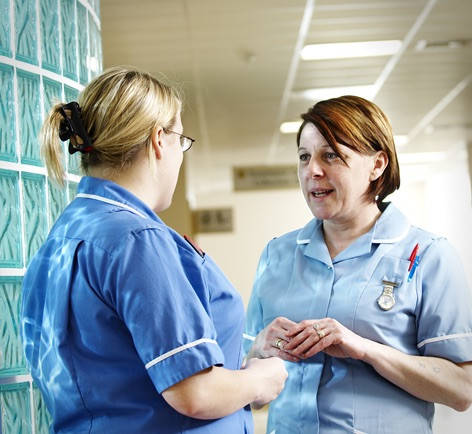
So how can you create a shallow Authority Gradient? Every time you ask a team member’s opinion, share knowledge, invite questions, admit fallibility or delegate responsibility; this way you are helping to develop a shallow Authority Gradient.
In teams where you are not in the position of authority, you can contribute by:
- actively engaging in dialogue with colleagues about difficult issues
- be open to challenge
- questioning with curiosity rather than judgement
- developing your skills and confidence to disagree where necessary.
Civility Saves Lives
Another approach to thinking about creating a shallow Authority Gradient is by considering the work by Mr Chris Turner, an Accident and Emergency Consultant - https://www.civilitysaveslives.com/
The idea is that incivility in teams impacts on patient safety, therefore Turner and the other clinical professionals involved with this initiative believe that ‘good teams save lives.’
Take a look at the Civility Saves Lives website and think about how you work within your team and organisation.
Do the senior leaders show civility or incivility?
A Chief Executive's blog
The Authority Gradient can also be quite subtle. Below you can read excerpts from the blog of Rob Webster, when he was Chief Executive at Leeds Community Healthcare NHS Trust. It illustrates his never-ending quest as a leader to reap the benefits of a shallow Authority Gradient.
Select each option to learn more.
Monday

'I walked into the meeting room, a number of partners from other organisations in the city with me, waiting for the arrival of some leading figures from the national voluntary sector movement. Two colleagues were still in the room. I smiled at them and motioned for them to leave so we could prepare for the next meeting. In doing so, without realising it, I had just triggered an event that reminded me of the importance of my impact as a Chief Executive.'
Friday

'My last meeting of the week, late on Friday. One of the colleagues I had smiled at on the Monday and gestured to leave the meeting room asked to see me. As I basked in the glow of a brilliant week she told me about how I had made her feel worthless.
'She had experienced a bad morning, things had not been going well and I had turned up with a bunch of "important people", gestured at the two of them to leave the room, "without even a smile, a word or a hello, how are you?" and made them feel worthless. Wow!'
Rob's thoughts about the week

Rob then describes his feelings about the interaction: 'It reminded me that the impact we intend does not matter. It is the impact felt that does. I apologised. I then thanked her for feeding back to my face and raising it with me. It has stayed with me since. As a reflective person I have thought hard about what it means.
'Clearly, it was the best bit of my week. Being reminded that leadership behaviours never stop. And the power of being in an organisation where a member of staff can confront the Chief Executive with negative feedback, safely and honestly'
Read more
To read more on Rob’s blog, visit https://www.wypartnership.co.uk/blog
Summary

Let's look at the key points regarding Authority Gradients.
- Authority Gradient refers to the difference in authority between senior and more junior team members.
- Teams led by a domineering leader experience a steep Authority Gradient.
- In steep Authority Gradients, other team members are more reluctant to express concerns, ask questions or clarify instructions.
- Shallow Authority Gradients make it easier for every team member to comment and contribute, therefore improving patient safety and quality of care.
- People are more likely to respond to the request to share concerns in a shallow Authority Gradient team than in a steep Authority Gradient, particular when we are civil towards each other.
- Cultural norms can affect how people interpret and work with Authority Gradients.
- The Authority Gradient can be reduced by engaging in mundane conversations to build relationships, engaging in dialogue, being open, questioning with curiosity rather than judgement and developing your ability to disagree where necessary.