Section: Week 4: Why leadership matters | Module 1 - Understanding and developing leadership practice | Moodle 45

Main course page
  • Module 1 - Understanding and developing leadership practice

    Module overview

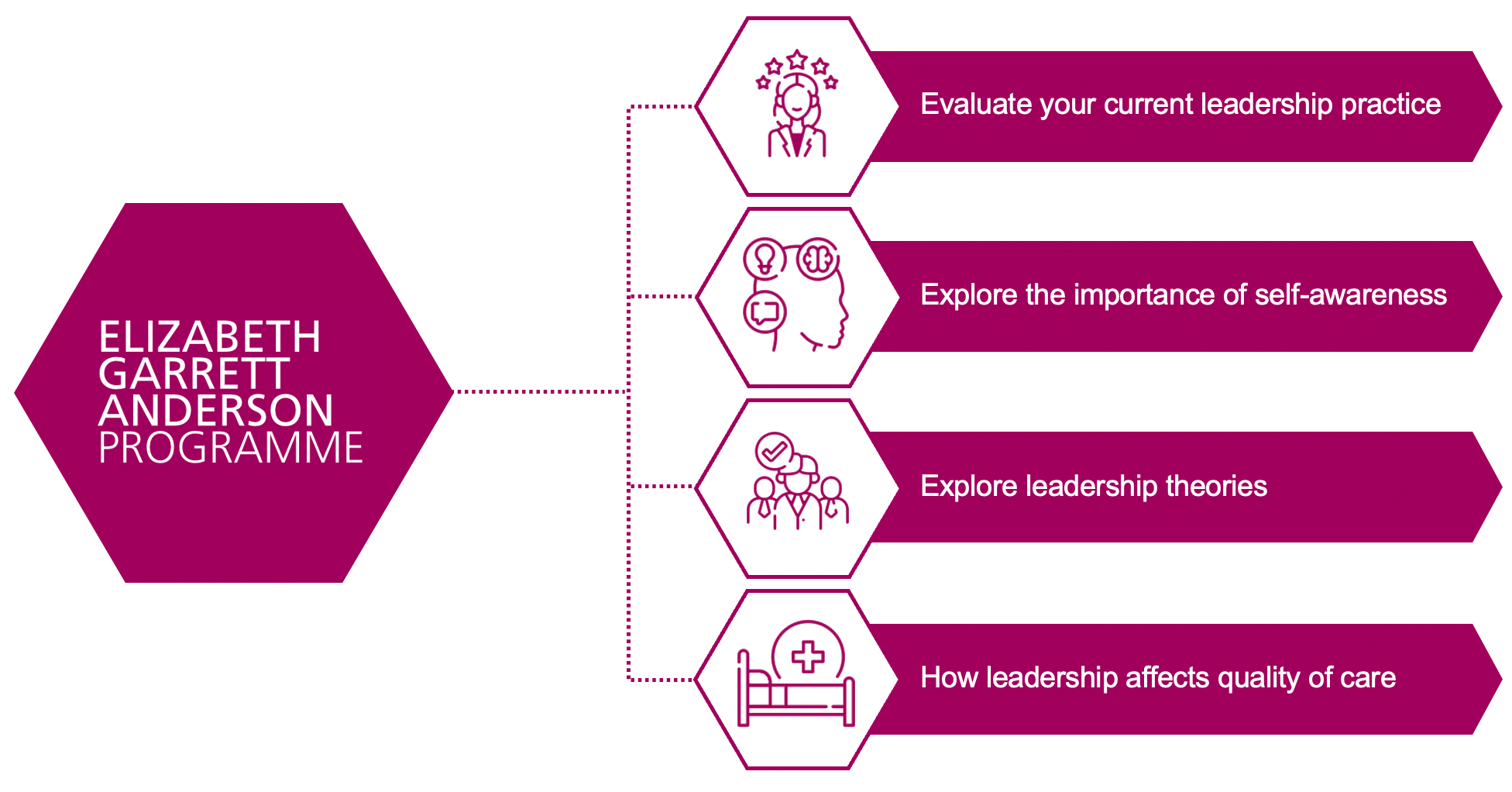
    You will begin your Anderson journey (including Senior Leadership Apprenticeships) by critically evaluating your current leadership practice and the extent to which your work, and that of your colleagues, makes a difference to patient care. You will also explore the importance of self-awareness, resilience and self-care and review these aspects of your own leadership practice. The module will explore leadership theories and concepts, introducing you to what is known about how leadership affects the quality of care and the patient experience. You will apply theory in practice by exploring how your leadership can positively enhance care and challenge behaviours which have a negative impact.
    Programme golden threads

    Running through all learning activities are three golden threads that reflect the fundamental values of the programme and are central to your leadership practice:

    “Through my participation on the Anderson programme, I will demonstrate how I, as a leader working with my team, organisation and system, strive to:

    1. Understand equality, diversity and inclusion, and implement this proactively in my leadership
    2. Remain constantly in tune with how the quality of care provided to patients, service users and their carers matches what we would want for those we love
    3. Lead sustainable improvement of relevant services and processes to ultimately enhance patient care and population health.”

    Planning your learning

    Module 1 is a four-week module worth ten credits. There are four topics of learning to complete; each topic represents one week of learning activity.

    A scheduled virtual meeting will take place in Week 1 of this module, with your tutor and your tutor group, to go through all of the module learning activities and a schedule highlighting key activities, discussion groups and other virtual meetings, so you know what to expect and are able to plan your time accordingly. There will be the opportunity to clarify this further at your first Action Learning Set (ALS) (or Inquiry Application Group (IAG) for GMTS participants) meeting.

    For apprenticeship participants, in the schedule of learning activities, we have provided prompts to log your OTJ (off the job) training in your apprenticeship platform; the indicative time each activity may take is provided in the schedule of learning activities. 

    Within this module, your tutor group will start to develop your understanding on how to generate evidence for  your Evidence Portfolio. The knowledge and skills relevant for this module are detailed below, and behaviours are developed throughout all the programme across all modules. 
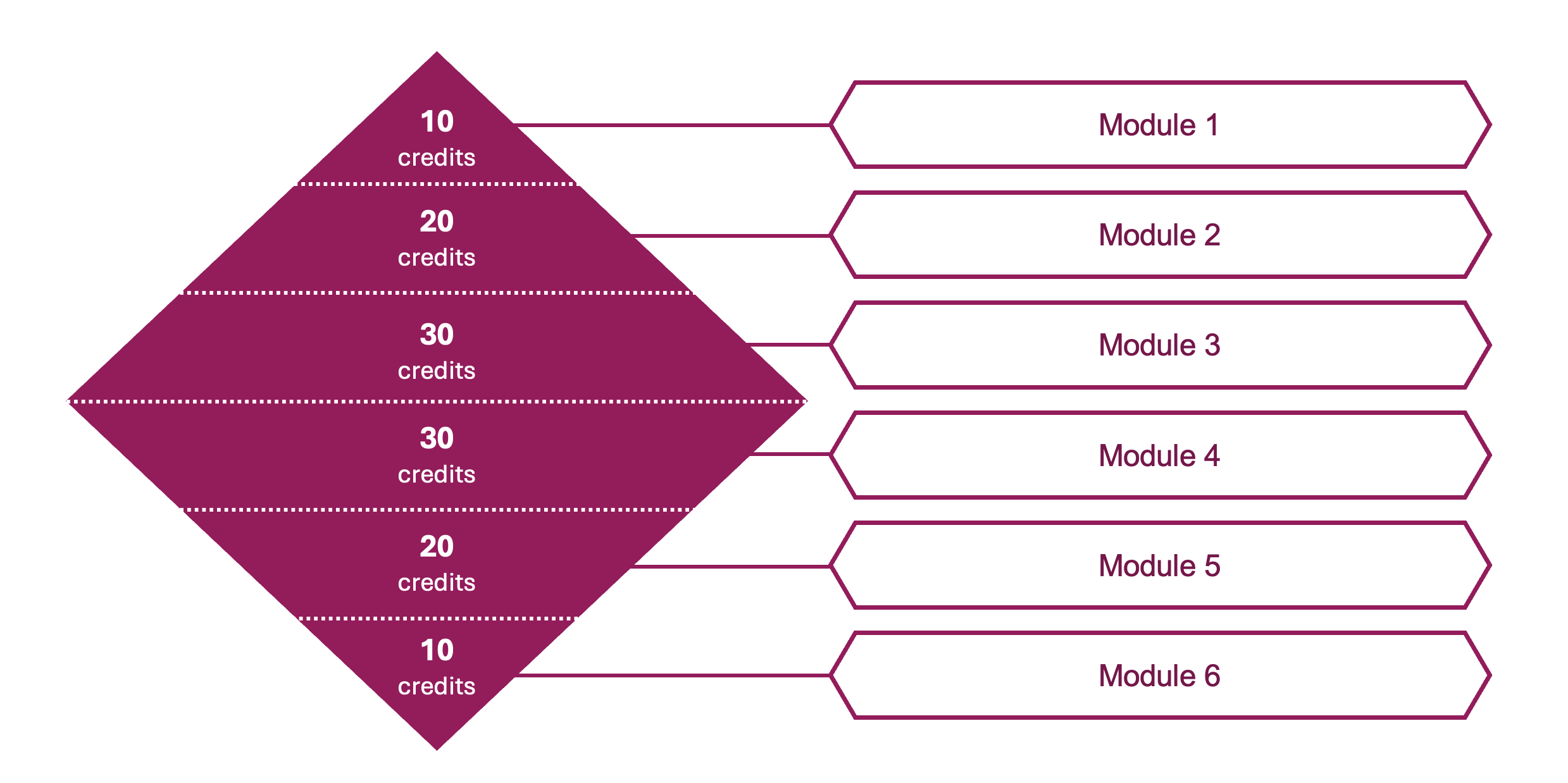
    Module 1 - 10 credits, Module 2 - 20 credits, Module 3 - 30 credits, Module 4 - 30 credits, Module 5 - 20 credits, Module 6 - 10 credits

    If you are an apprenticeship participant, please refer to Module 0 to review the knowledge, skills, and behaviours relevant to this module. It is important to be clear about the KSBs that are linked to the Professional Discussion (Portfolio of Evidence) and the KSBs linked to the Strategic Business Proposal.

    Learning outcomes

    View learning outcomes
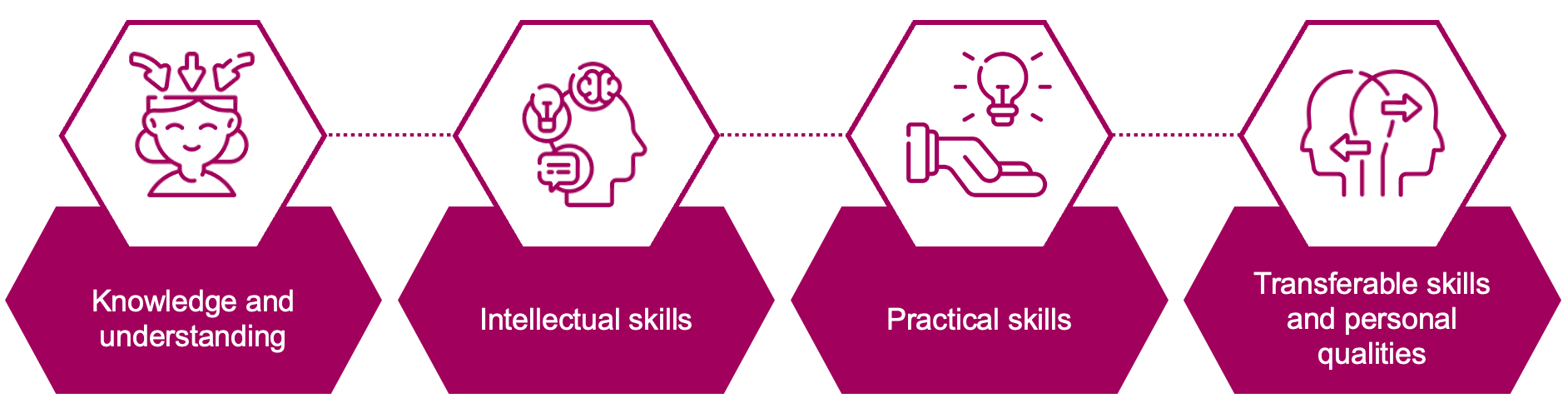
    There are 10 learning outcomes for this module: 

    Category of outcome Learners should be able to:
    Knowledge and understanding 
    • Demonstrate systematic understanding of management and leadership theories and debates 
    • Demonstrate critical awareness of the theories and methods of reflective practice 
    Intellectual skills
    • Critically apply management and leadership theories to your own leadership practice and in the context of change and leading for improvement
    • Apply theories and methods of reflective practice 
    Practical skills 
    • Demonstrate practical use of appropriate management and leadership skills and approaches to improve the quality of patient care 
    • Demonstrate reflexivity in your leadership practice  
    • Demonstrate practical skills to embed diversity, equality and inclusion in your leadership practice 
    • Demonstrate how your leadership practice improves and sustains care quality 
    Transferable skills and personal qualities 
    • Undertake a critical reflection to demonstrate self-awareness, self-reflection, and management of self 
    • Identify development needs in relation to leadership practice


    Developing your personal learning objectives 

    Take some time to review the Learning Outcomes for this module. Using your Skills Scan that you completed as you joined the programme, consider what you may wish to focus on in Module 1, for example: 

    • What are you particularly interested in within the module? 
    • How does this link to your work role and current projects? 

    Now develop some SMART personal learning objectives for this module and note them in your Learning Journal. 

    You may be familiar with the SMART mnemonic, if not here is a reminder – your goals need to be: 

    • Specific 
    • Measurable 
    • Achievable 
    • Realistic 
    • Time based. 

    Supporting documents

    Below you will find some key documents to support your learning and reading throughout the module. 

    Module scheduled activities document is now published in your cohort area (it is no longer published with the module contents)

    Module bibliography is now published in your cohort area (it is no longer published with the module contents)

    • Your Anderson Learning Journal will function as a:

      • Document repository
      • Planning tool 
      • Reflective learning diary
      • Progress tracking and monitoring 

      It is essential that you keep this journal up to date by ensuring you upload key documents and log progress with your learning

    • This checklist shows your progress through the programme (in a similar way to the green dots in the left-hand menu) with the addition of an overall percentage bar completion. As you click 'mark as done' on each activity, this list will automatically update to reflect progress.

      (Tutors can see an overview of participant progress using the 'View Progress' tab and turning on progress bars.)

Week 4: Why leadership matters

  • Week 4: Why leadership matters

    In this topic you’ll focus on the impact that leadership has in the workplace and, particularly, how this affects the quality of care you give to patients. Even if your leadership role is in a non-clinical function, how you lead others ultimately impacts upon patient care.

    If you are an apprentice, please refer to Module 0 to review the knowledge, skills, and behaviors relevant to this week.

    • Observing care may not be the easiest thing to do, but it is a powerful development tool. You may gain an understanding of different perspectives on the patient experience.

      This activity will form the first part of your assessed work.

       (Duration: 5 hours)

    • This web page version of the guide is provided as an accessible alternative to the PDF version below. Content is the same.

    • Why does leadership matter to quality care? What effect do your decisions as a manager have on the patient experience? What influence does your leadership have on improvement initiatives?

      This activity will form the second part of your assessed work.

      (Duration: 2 hours)

    • Why does leadership matter to quality care? What effect do your decisions as a manager have on the patient experience? What influence does your leadership have on improvement initiatives?

      These activities will form the second part of your assessed work.

    • What is an authority gradient and how is it relevant to clinical care?

      (Duration: 1 hour)

    • This item is an "e-Learn" in the form of a 'moodle book'. 

      The authority gradient (e-Learn)

      When you have finished return to the course using the menu at the left of the screen.

    • This item is an "e-Learn" in the form of a 'moodle book'. 

      When you have finished return to the course using the menu at the left of the screen.

    • Every leader has to consider human factors. This activity introduces some of these factors and highlights their importance in health and social care.

      (Duration: 1 hour)

    • The following activities consider an international perspective.

    • Now we want you to think about how other organisations approach patient safety and what you may be able to learn from them. There is no one right way of course, but here is a brief example from a couple of organisations . You may well have other examples that provide food for thought.

    • The Virginia Mason Medical Center has developed a reputation for improving patient safety. How does their approach to staff improvement compare with the approach used in your organisation?

      (Duration: 20 mins)

    • NHS Merseycare is a Mental Health and Community Organisation with over 8,500 members of staff. 

    • As a leader, you will occasionally be called upon to deal with a sensitive situation involving a member of your staff. This activity will explore approaches to these situations.

      (Duration: 1 hour)

      (Alternative video link alternative added Nov 2024)

    • Conversations on a sensitive topic can be difficult to have. This activity provides an insight into approaches towards difficult conversations.

      (Duration: 1.5 hour)

    • Through an immersive scenario you will explore how to deal with a complaint and apply this to your own workplace.

      (Duration: 2 hours)

    • Please allow a few seconds for the H5P to load. You can also maximise the window by clicking on the double arrows in the top left of the player. 
    • A reflection video from Fiona Copeland. Fiona is the former chairperson of the Primary Ciliary Dyskinasia Family Support Group.
