The Pareto principle
 Approx reading time: 5 mins
The Pareto principle—often called the 80/20 rule—is a simple yet powerful idea that suggests a small number of causes are often responsible for the majority of effects. Named after Italian economist Vilfredo Pareto, who observed in the late 19th century that roughly 80% of Italy’s land was owned by 20% of its population, the principle has since been recognised as a useful heuristic in economics, business, time‑management, and many other fields.
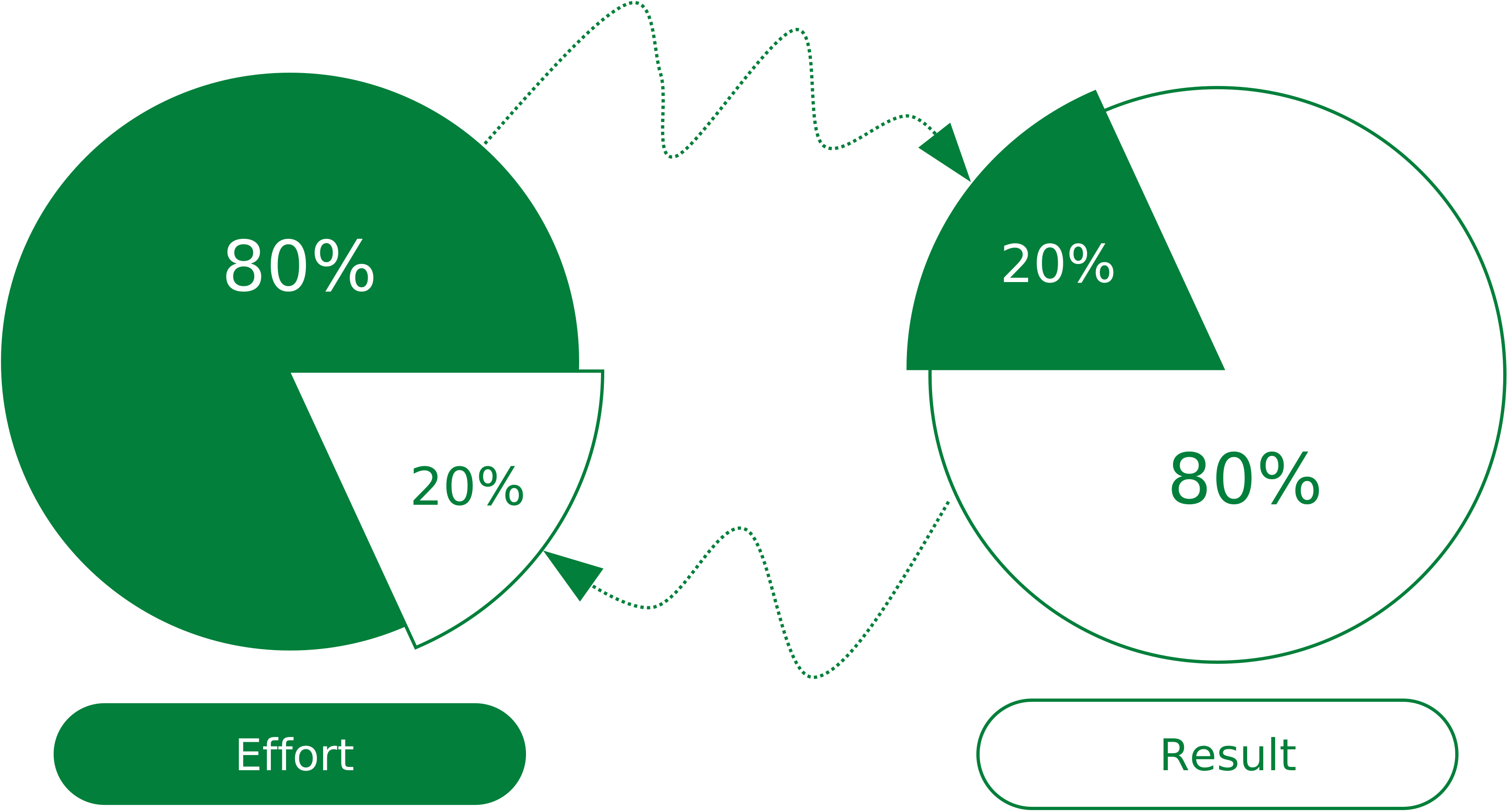
While the exact ratio doesn’t always have to be 80/20, the broader insight remains consistent: outcomes are frequently distributed unevenly. In practical terms, the Pareto principle helps people and organisations focus their time and resources where they matter most.
For example, businesses often find that a small proportion of products generate the majority of revenue, or that a handful of customers account for most support requests.
By identifying these vital few inputs, leaders and teams can make more targeted decisions—whether that’s improving key processes, prioritising certain tasks, or reallocating effort to the areas with the highest impact.
Beyond organisational use, the principle is also a valuable tool for personal productivity. Many people discover that a limited number of their daily tasks contribute the most to their goals, while the rest provide diminishing returns. Applying the Pareto mindset encourages individuals to distinguish between high‑value activities and those that merely consume time, enabling more efficient and purposeful work.
Its elegance lies in its flexibility: although not a strict mathematical rule, the Pareto principle offers a helpful lens for understanding imbalance and directing attention to what truly drives results.