Work smarter, not just harder

Explore four powerful planning frameworks used across the NHS to manage workload sustainably, reduce waste and protect staff wellbeing and then put your skills to the test.


The frameworks

Each framework below offers a different lens on productivity. Read through all four before starting the activity, you'll need to draw on this knowledge to help Sarah.

Eisenhower Matrix

A simple 2x2 grid that sorts tasks by urgency and importance. It helps you decide whether to act immediately, schedule for later, delegate to someone else, or eliminate the task altogether. In the NHS, where competing demands can feel relentless, this framework gives teams a shared language for prioritisation, reducing reactive firefighting and creating space for strategic work.

Focus of today's activity

Time Boxing

Allocating a fixed, dedicated block of time to a specific task and stopping when the time is up. It prevents tasks from expanding to fill available time (Parkinson's Law) and protects space for high-priority work.

NHS teams use time boxing to protect time for supervision, planning, and professional development activities that often get squeezed by immediate pressures.

Schedule & protect

Pareto Method (80/20)

The principle that 80% of outcomes come from 20% of efforts. By identifying which tasks generate the most impact, teams can focus energy where it matters most and deprioritise low-value activity.

In workforce planning and service improvement, Pareto analysis helps NHS leaders identify where small changes will produce the greatest gains in patient outcomes or staff experience.

Focus on impact

Lean - Waste Identification

A methodology focused on eliminating activities that consume resources without adding value. Lean identifies eight types of waste including waiting, overprocessing, unnecessary motion and underused talent.

Widely used in NHS improvement programmes, Lean helps teams redesign processes so that clinical staff spend more time on direct patient care and less on avoidable administrative burden.

Remove what doesn't add value


The Eisenhower Matrix — a quick reference

Before you start the drag and drop activity, familiarise yourself with the four quadrants. Each task Sarah faces will belong in one of these boxes.
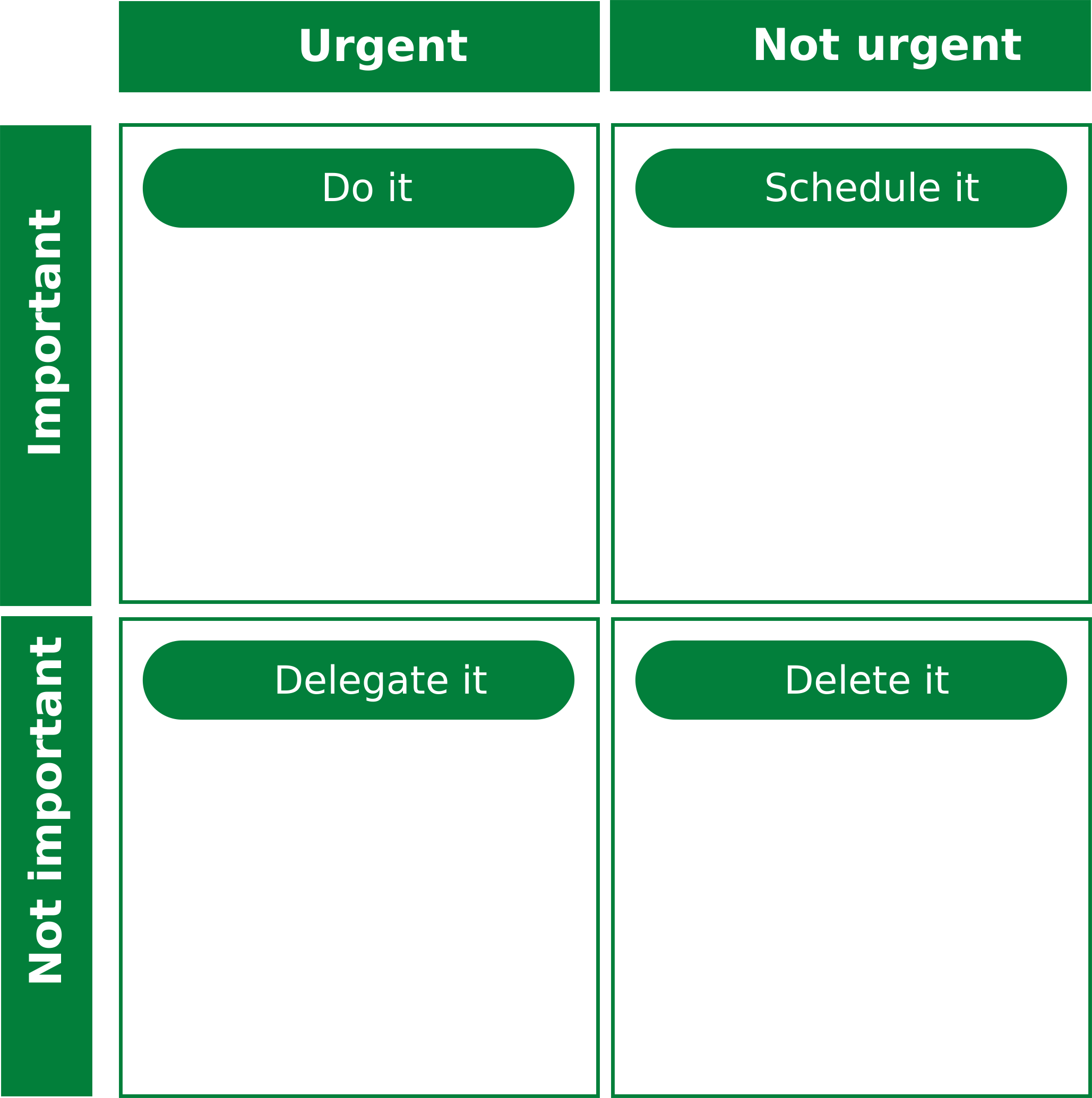
Urgent & important - Do it

Not urgent & important - Schedule it

Act now. Patient safety issues, crises and critical deadlines that only you can handle.

Plan time for these. Strategic work, development and prevention. This is where high performers focus.

Urgent & not important - Delegate it

Not urgent & not important - Delete it

Hand these off where possible. Interruptions and low-value requests that feel urgent but don't need your direct input.

Stop doing these. Time-wasters that add no value and drain energy from meaningful work.

Last modified: Tuesday, 31 March 2026, 12:06 AM