The importance of data
 Approx reading time: 5 mins
Data has become one of the most valuable assets in modern organisations. It provides the evidence needed to understand performance, uncover patterns, and make informed decisions rather than relying on intuition alone. When used well, data enables teams to identify challenges early, allocate resources effectively, and continuously improve services or processes. In settings where accuracy and efficiency are critical—such as healthcare, digital learning, or operational management—reliable data acts as the backbone for strategy, innovation, and accountability.
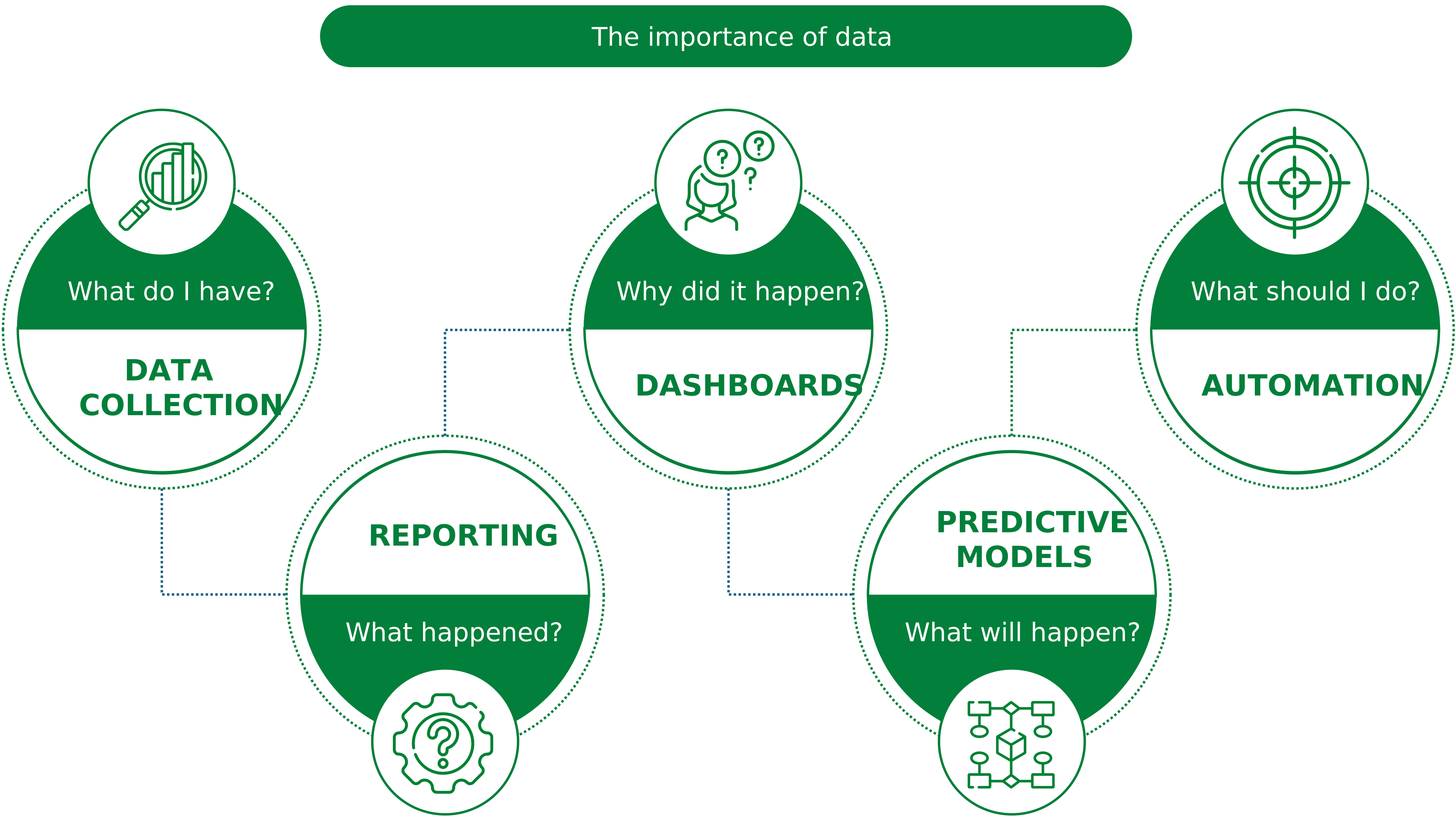
To move from raw information to meaningful impact, organisations can follow a clear five‑step data maturity model. First, data collection ensures that relevant information is captured consistently and accurately from the right sources. Next, reporting transforms that raw data into structured outputs that highlight key metrics and trends. Building on these, dashboards provide visual, real‑time insights that help teams monitor performance and make quick decisions. As understanding deepens, organisations can apply predictive models to anticipate future behaviour, risks, or demand. Finally, automation enables systems to take action based on data insights—streamlining workflows, reducing manual effort, and enabling teams to focus on higher‑value tasks.