Techniques for managing excessive workload
 Approx reading time: 5 mins
Recognising the signs of excessive workload is the first step. Knowing what to do about it is the second. These four techniques give Sarah and you practical tools to act.
These techniques are most effective when used together not as standalone fixes
|
Before you read — connect this to Sarah Sarah's team is showing multiple signs of excessive workload: fatigue concerns, documentation completed at home, rising referrals and sickness absence. She wants to lead proactively but isn't always sure which technique to reach for. Each section below describes a technique and shows how Sarah has used it, or could use it, in practice. |
Technique 1: Time boxing
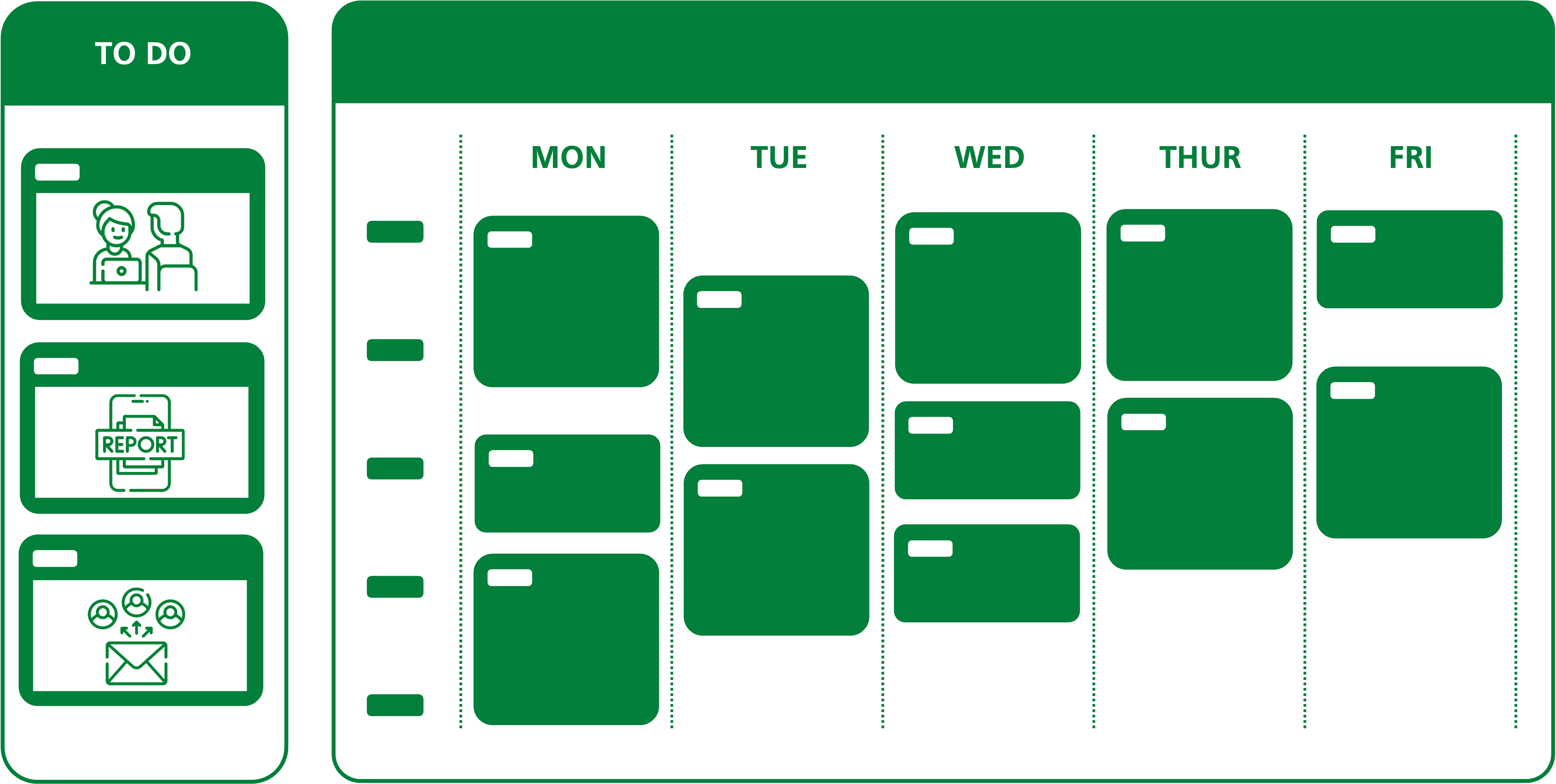
Time boxing means allocating a specific, fixed block of time to a task and stopping when that time is up, regardless of whether the task is complete. It prevents tasks from expanding indefinitely and protects capacity for other priorities.
Why it works
Without time limits, tasks expand to fill available time known as Parkinson's Law. Time boxing counteracts this by creating intentional boundaries, reducing the risk of one task consuming the whole day.
Key points
✓ Set a realistic time limit before starting
✓ Block it in your calendar to protect it
✓ Stop at the end even if unfinished
✓ Review what remains and reschedule deliberately
|
Sarah in practice "Sarah allocates 12:30 to 1pm for her noon report a fixed block, no interruptions. When the time ends she submits what she has. This keeps the report from running into the afternoon and crowding out her 2pm supervision preparation." |
Technique 2: Psychological safety and speaking up
Psychological safety is the belief that you can speak up about concerns, mistakes or workload without fear of blame or negative consequence. In high-pressure environments like community nursing, it is a critical protective factor for both staff wellbeing and patient safety.
Why it matters for workload
If staff do not feel safe raising concerns, workload problems remain invisible to leaders until they become crises. Two of Sarah's nurses quietly raised fatigue concerns that word quietly is significant. A psychologically safe team raises these concerns openly and early.
Key points
✓ Respond to concerns promptly and without blame
✓ Create regular structured space for staff to speak up
✓ Model vulnerability share your own pressures
✓ Act on what is raised silence breeds distrust
|
Sarah in practice "When a nurse messages Sarah saying she feels overwhelmed, Sarah responds immediately: 'I have seen your message. Let's talk at supervision at 9. I am here.' This response prompt, non-judgmental, action-oriented reinforces that speaking up is safe." |
Technique 3: Data-led decision making
Data-led decision making means using both quantitative data (numbers, trends, patterns) and qualitative data (staff feedback, observations) to make workload decisions rather than relying solely on instinct or responding to whoever is loudest.
Quantitative data to track
- Referral numbers and weekly trends
- Triage completion times and backlogs
- Sickness absence frequency and duration
- Overtime and missed break patterns
Key points
✓ Combine numbers with staff experience both matter
✓ Track trends over time, not just point-in-time snapshots
✓ Use data to escalate concerns, not just to report
✓ Present data with a clear ask not just a problem
|
Sarah in practice "Sarah presents referral data to her manager: 'Our referrals increased by 18% in four weeks. We currently have capacity to safely triage X referrals per day.' This shifts the conversation from opinion to evidence and gives Sarah a credible basis to negotiate." |
Technique 4: Delegation and boundary setting
Delegation is not offloading it is matching tasks to the right person at the right time. Boundary setting means being explicit about what you will and will not take on, and saying so clearly and calmly. Both are essential skills for sustainable leadership.
Why leaders avoid it
Many leaders especially those who have come from clinical roles find delegation difficult. It can feel like dumping work, or admitting you cannot cope. In reality, absorbing tasks that others could handle is a leadership risk, not a virtue.
Key points
✓ Delegate by matching task to skill and capacity
✓ Set boundaries with evidence, not just refusal
✓ Acknowledge the request then set the boundary
✓ Absorbing everything is not resilience it is risk
|
Sarah in practice "Sarah sends a two-line reply to her manager's email: 'Received I will respond in full this afternoon.' She does not attempt to answer in full while preparing for supervision. She sets a boundary on her own time calmly and professionally." |