Applying LEAN Six sigma
 Approx reading time: 5 mins
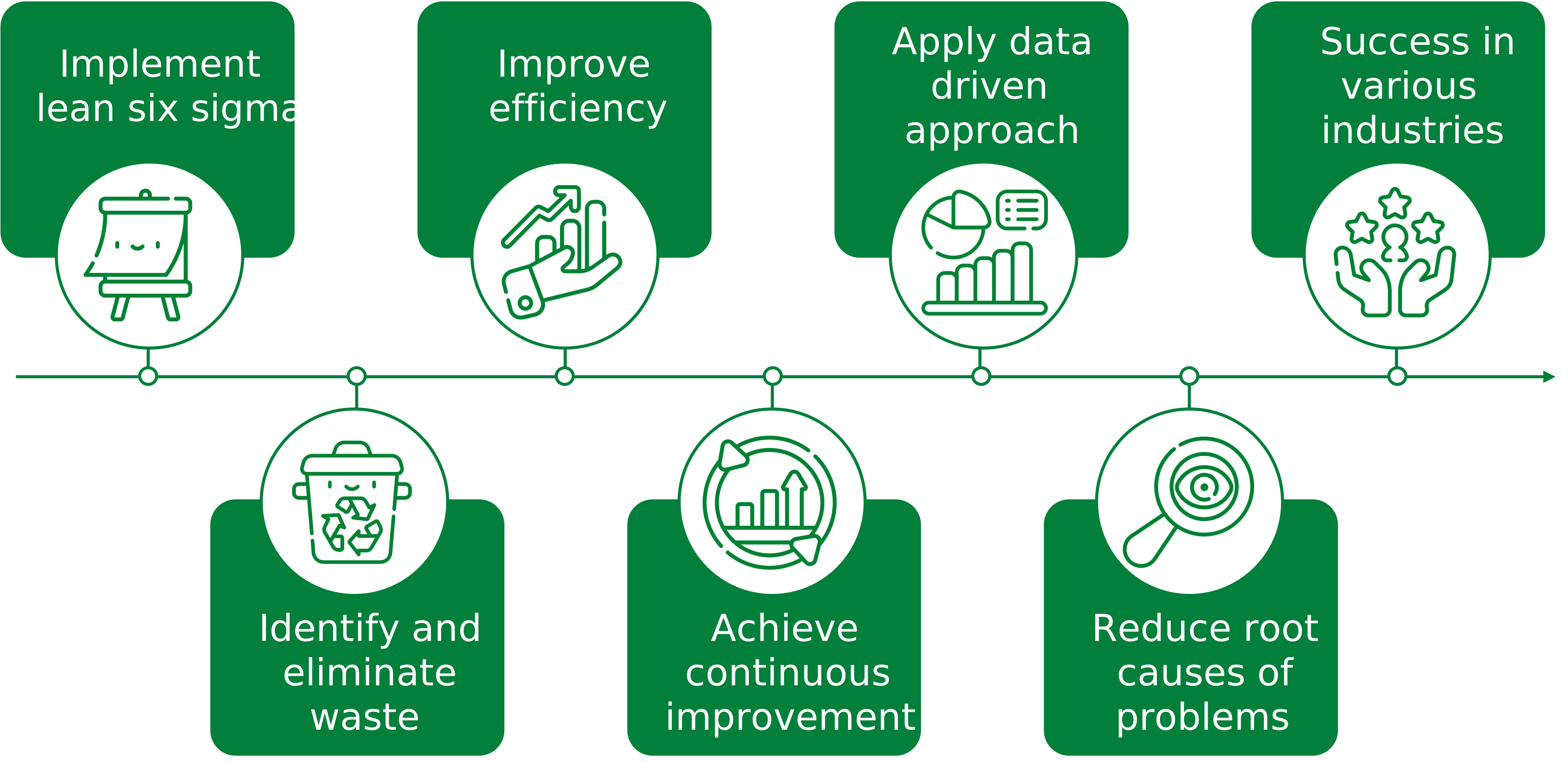
Lean Six Sigma is a structured approach to improving the way work gets done by reducing waste, eliminating defects, and streamlining processes. It combines two complementary methodologies—Lean, which focuses on flow and efficiency, and Six Sigma, which focuses on reducing variation and errors. When used together, Lean Six Sigma helps organisations deliver better outcomes with fewer resources, while maintaining high standards of quality and consistency.
Lean principles centre on the idea of maximising value for the end user by identifying and removing activities that do not add value. These “waste” activities often include delays, unnecessary movement, duplicated effort, or overly complex steps in a workflow. By analysing a process from start to finish, teams can redesign it to be simpler, faster, and more intuitive. In healthcare settings, this can lead to improvements such as reduced waiting times, clearer pathways, and better use of staff capacity.
Six Sigma complements this by using data-driven tools to understand where variation occurs and how it affects outcomes. Instead of relying on guesswork or assumptions, Six Sigma encourages teams to gather evidence, analyse root causes, and implement targeted solutions. The goal is to achieve more predictable and reliable results, reducing the chance of errors, rework, or inefficiencies. This analytical approach supports continuous improvement and helps organisations make decisions based on real insights rather than intuition alone.
Together, Lean and Six Sigma form a powerful framework for problem-solving and service improvement. Lean brings speed and flow; Six Sigma brings accuracy and control. When applied in combination, they encourage teams to look critically at the way things are done, challenge unhelpful traditions or bottlenecks, and design processes that better support staff, users, and organisational goals. The methodology is scalable too—it can be applied to small team processes or to large, system-level challenges.
Lean Six Sigma is also a people‑centred approach. Although it provides a range of tools and techniques, its effectiveness depends on engaging staff, fostering collaboration, and encouraging a mindset of reflection and continuous learning. This human element is especially important in healthcare, where improving processes ultimately improves patient and staff experience. By embedding Lean Six Sigma thinking, organisations can create a culture where problems are openly explored, solutions are co‑created, and improvement is an ongoing, supported part of everyday work.